
No, you don’t automatically need both garage door springs replaced just because one is broken, though replacing them in pairs is often the right call for balance and longevity. The real question is whether a technician actually inspected both springs before making that recommendation. If “both need replacing” gets announced within minutes, with no visible wear shown on the second spring, and the price jumps the moment that recommendation appears, that combination is a common scam pattern, not a standard safety practice. This kind of question comes up during almost any garage door repair, not just spring work, so knowing the difference between a genuine pairing recommendation and a sales tactic comes down to timing, evidence, and whether the pricing lines up with what you’re actually shown.
Key Takeaways
- Torsion springs often get replaced in pairs since they wear at similar rates, but that’s a recommendation, not an automatic rule that applies regardless of what the second spring actually looks like.
- A real inspection includes checking both springs individually for visible wear, rust, or gaps in the coils.
- Ask to see the specific damage on each spring before agreeing to replace both.
- Be cautious if “both need replacing” is announced within minutes, before any real inspection happens.
- Watch for the price jumping specifically once “both springs” enters the conversation.
- Get a second opinion if you’re not shown clear evidence for replacing a spring that looks fine.
- Scheduling routine garage door maintenance helps you recognize genuine wear before a technician ever has to tell you about it.
Legitimate Spring Recommendation vs. Scam Sign
Category | Legitimate Recommendation | Scam Sign |
Inspection | Both springs checked individually, balance tested | Recommendation made within minutes, no real inspection |
Evidence | Visible rust, gaps, or wear shown to you directly | Vague claim with nothing actually shown |
Reasoning | Explains why pairing matters for balance and longevity | No explanation beyond “it’s safer this way” |
Pricing | Cost reflects only the work that’s actually needed | Price jumps specifically once “both” enters the quote |
Flexibility | Willing to replace just the broken spring if asked | Insists both must go, no alternative offered |
1. Neither Spring Was Inspected Before You Were Told Both Need Replacing
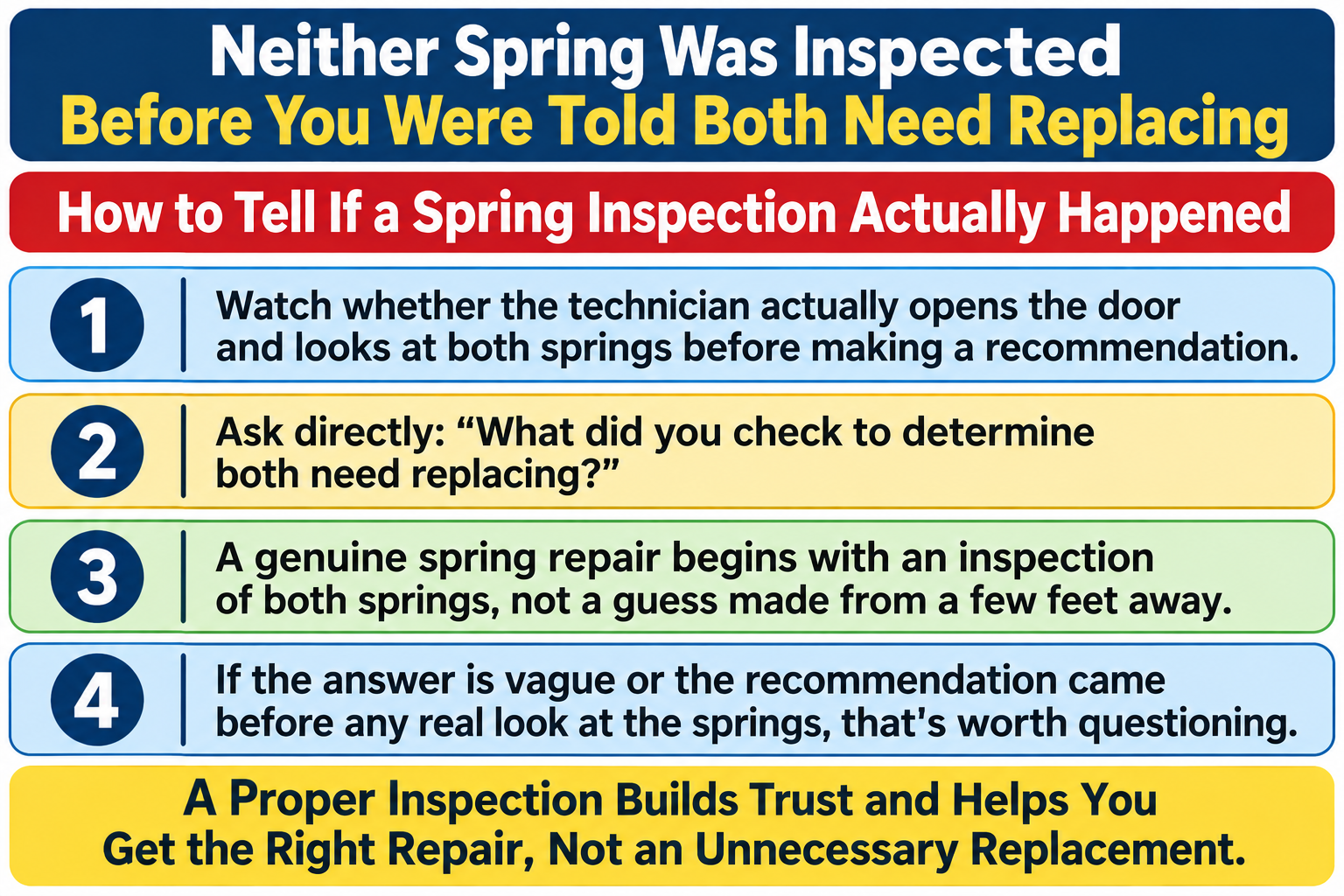
A real spring inspection takes a few minutes. The technician opens the door, checks both springs individually for wear, and tests the door’s balance by hand. If a technician tells you both springs “must” be replaced almost as soon as they walk up, before the door’s even been opened or the springs looked at closely, that recommendation didn’t come from an inspection. It came before one, which means it’s based on assumption rather than evidence.
How to Tell If a Spring Inspection Actually Happened
- Watch whether the technician actually opens the door and looks at both springs before making a recommendation.
- Ask directly: “What did you check to determine both need replacing?”
- A genuine spring repair begins with an inspection of both springs, not a guess made from a few feet away.
- If the answer is vague or the recommendation came before any real look at the springs, that’s worth questioning.
Call a pro if you want a second, independent inspection before authorizing work on a spring that hasn’t visibly failed.
If the price also jumped once this recommendation came up, read Why Did My Garage Door Repair Quote Change After the Technician Showed Up? 5 Bait-and-Switch Pricing Tricks to Know.
2. The Technician Can’t Show You Visible Damage on Either Spring
Springs are one of the components homeowners are least equipped to evaluate themselves, which makes a verbal-only claim especially hard to challenge in the moment, and technicians who rely on this trick generally know it well. Real spring damage is visible: rust along the coils, a visible gap where the spring has separated, or a clear physical break. If a technician tells you a spring is “worn out” or “about to go” without pointing to any of that, ask to see it directly before you agree to anything.
What Real Garage Door Spring Damage Actually Looks Like
- Ask the technician to point to the specific rust, gap, or wear they’re describing.
- A spring that still looks intact, with no visible rust or separation, doesn’t automatically need replacing just because its pair broke.
- If two springs were installed around the same time and one fails, ask whether the other is actually showing comparable wear, or just sitting near a spring that failed.
- Cross-check unusual claims against the International Door Association’s scam awareness resources, which document unnecessary-repair patterns reported across the industry.
Call a pro if you want someone to physically show you what’s wrong before you agree to replace anything.
If you want the complete rundown of red flags beyond springs, read How Do You Avoid Garage Door Repair Scams? 9 Red Flags to Watch For Before You Book.
3. The Price Jumps the Moment “Both Springs” Enters the Conversation
Watch the timing of the price change closely. If the quote was reasonable for a single spring, then jumps significantly the moment “both” enters the conversation, with no new inspection or evidence to justify it, the recommendation may be about the bigger bill rather than the actual condition of your door. This isn’t to say pairing springs is never the right call, only that the price and the evidence should move together, not one racing ahead of the other, and not one arriving minutes before the technician’s already reaching for a second spring box off the truck.
Why Spring Replacement Pricing Is a Common Garage Door Scam Target
- Ask for a separate price for one spring versus both, so you can see exactly what the second spring adds to the bill.
- If the “both springs” price seems disproportionate to a single spring’s cost, ask why, and don’t accept “it’s just how we price it” as an answer.
- Get the reasoning and the price in writing before agreeing to anything beyond the original issue.
Call a pro if a pricing jump feels tied to a sales pitch rather than a real inspection.
If you’re also being asked to pay the full amount in cash before this work starts, read Is It a Red Flag If a Garage Door Company Demands Cash Upfront? 4 Payment Scams Homeowners Should Know.
Get a Real Inspection Before You Agree to Both
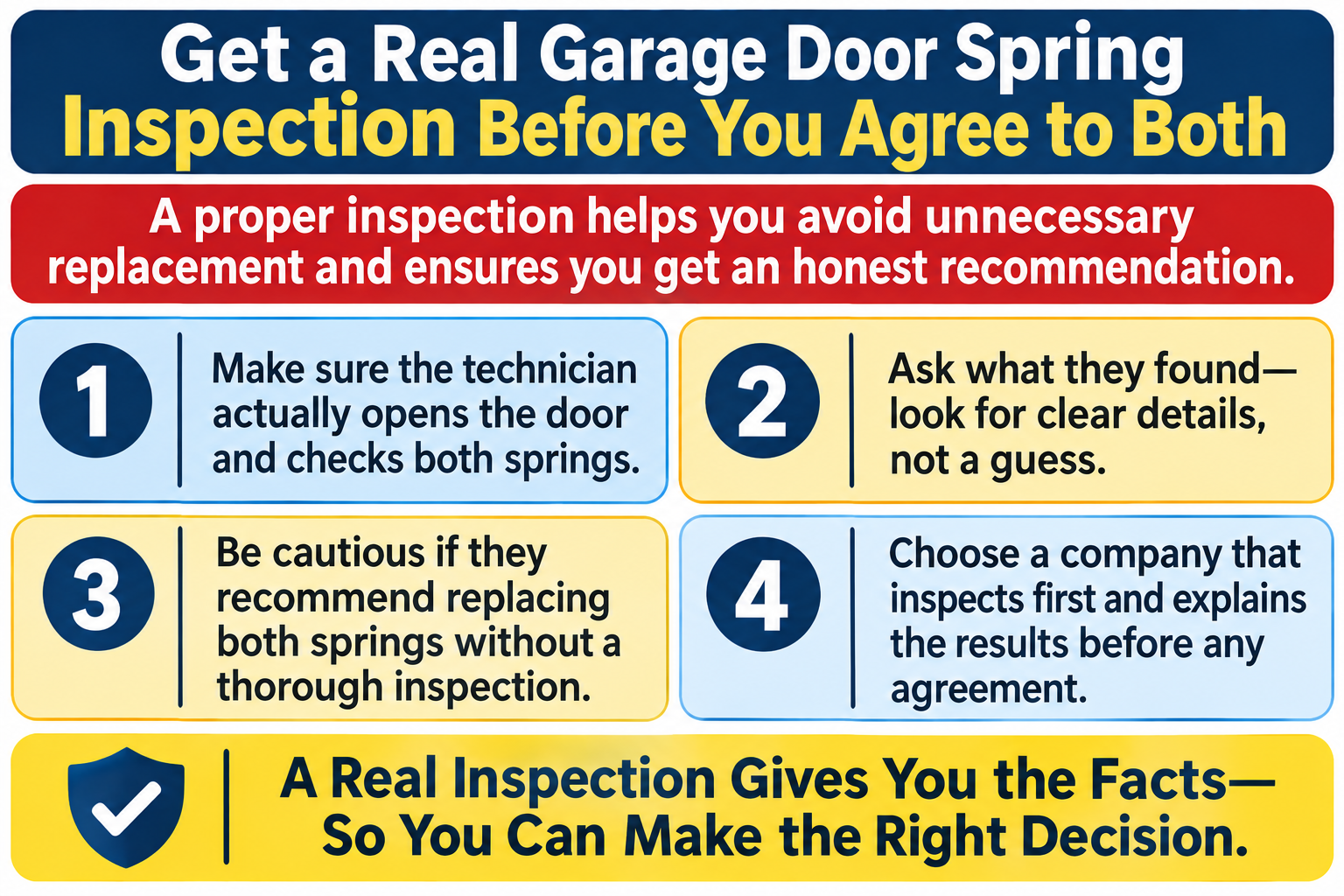
Replacing both springs together is often genuinely the right call, but that recommendation should follow an actual inspection, not arrive before one. If a technician can’t show you the damage or explain the reasoning, it’s reasonable to ask more questions or get a second opinion before agreeing to the larger job. A few extra minutes of questions costs you nothing; agreeing to unnecessary work does. Dynamic Door Service Tulsa inspects before we recommend, not the other way around. Contact us or give us a call to book a service call with our team for a spring assessment you can actually see for yourself.